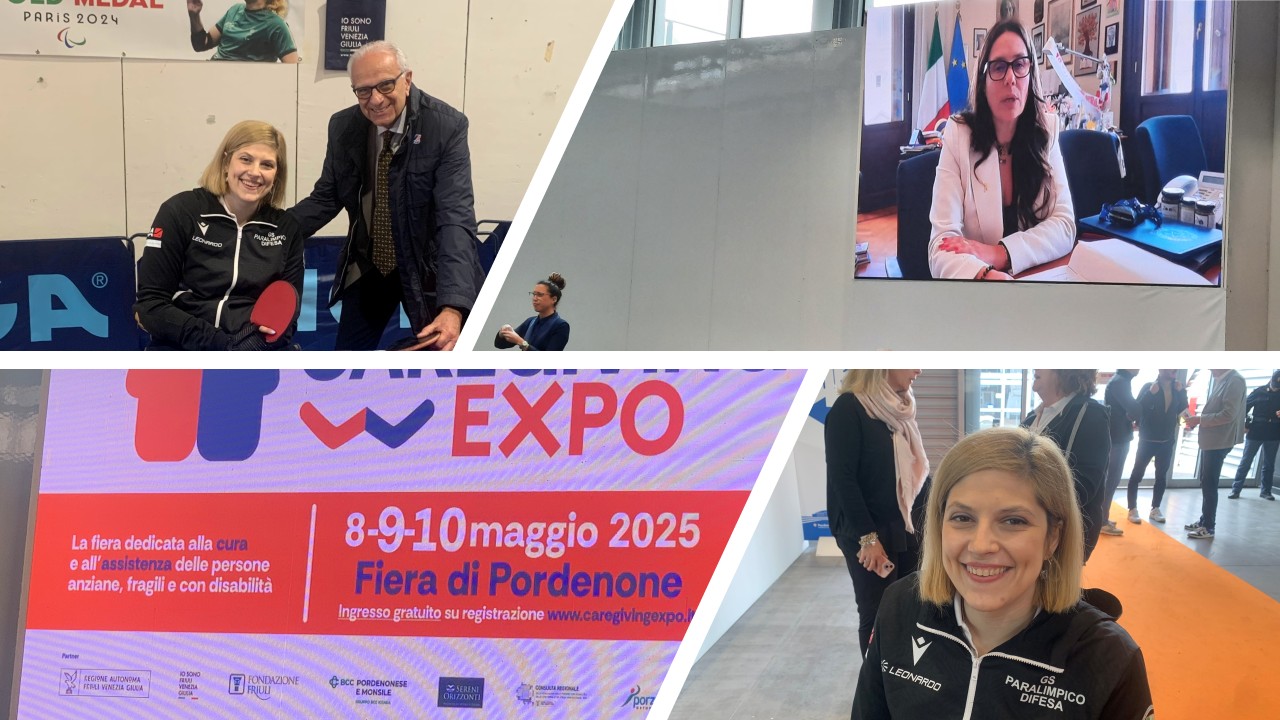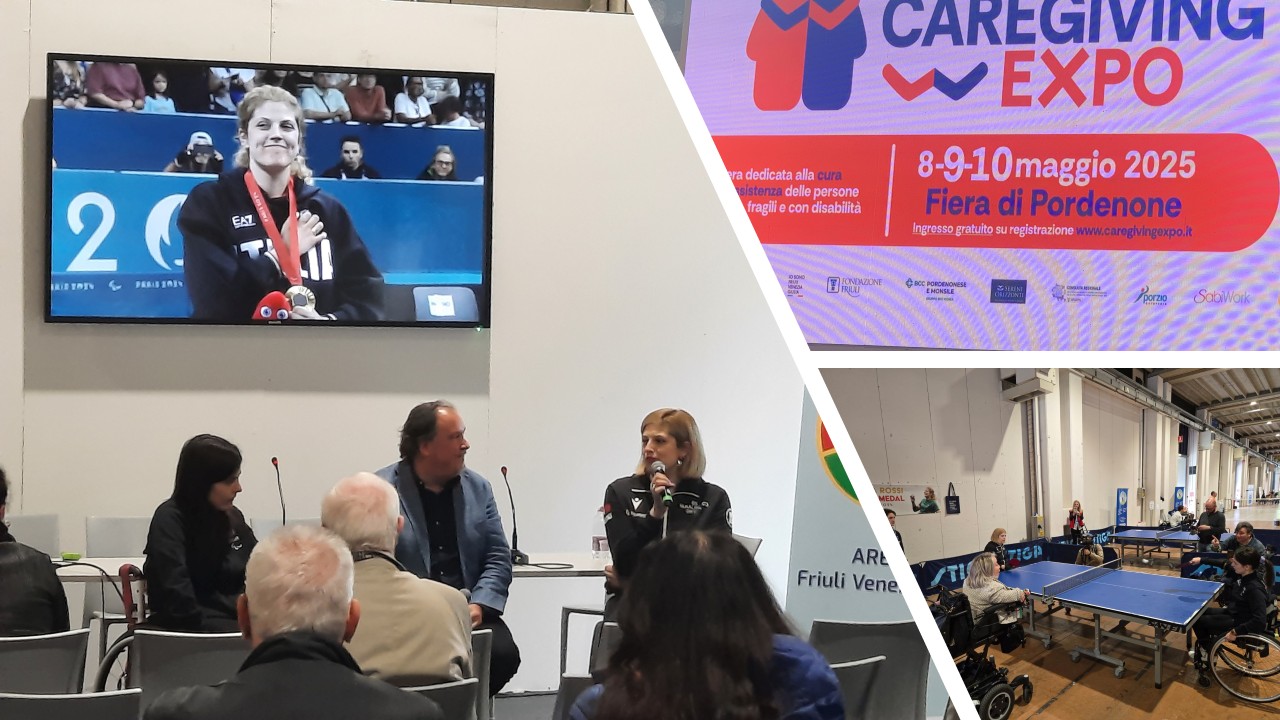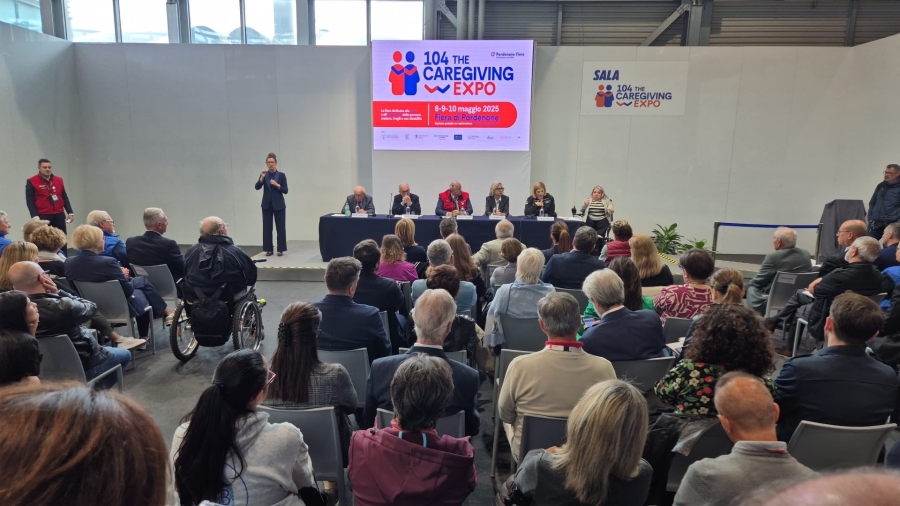
A A look both within and beyond borders to capture a current snapshot of what is being done to support people with disabilities, and how sport can help overcome difficulties and restore enthusiasm—even give life a new meaning. This was the spirit of “Disability Without Borders”, the conference held in Pordenone to open the 104th Caregiving Expo, the first edition of a fair entirely dedicated to everything related to disability and those who help and offer new perspectives to people who lack—or have lost—full physical function.
Under the impeccable moderation of Filippo Grassia, Head of Communication for Panathlon International, representatives from Italy, Austria, Slovenia, and Croatia came together to discuss the current status, projects, initiatives, and future outlook for disability support and Paralympic sport.
The event was opened and closed by Panathlon International President Giorgio Chinellato, who emphasized P.I.'s commitment to supporting Paralympic sport—as well as its efforts to prevent potential disabilities. “One of many examples,” he noted, “is the pressure we're putting on automobile federations to develop an educational program in schools, so future drivers and motorcyclists are trained in safe driving, traffic laws, and good practices on the road—to prevent accidents that all too often have serious consequences on health and future life.”
The conference also featured Giada Rossi, gold medalist in table tennis singles at the Paris 2024 Paralympic Games and the event’s patron; Carlotta Ragazzini, bronze medalist in the same discipline in Paris; and sports commentator Dario Di Gennaro, the voice of Paralympic sport on RAI.
Jessica Acquavita (Vice President, Istria Region, Croatia): “In Croatia, there are public investments in building infrastructure and sports facilities that enable people with disabilities to participate in sports. There is also government support, including funding, to promote sports among children in schools, culminating in interschool championships. These are sports activities, but also lifesaving ones, as they represent an investment in public health, especially for the younger generations.”
Major Sabina Ferraris (Italian Armed Forces, Paralympic Sports Office): “Our sports group has 88 athletes, most of them military personnel who were injured in the line of duty. But thirty of them are civilian Paralympic athletes—top performers—whom we've contracted on three-year agreements. We hope to retain them permanently in the future as civilian staff within the military administration. The message we want to send is clear: we leave no one behind. If you are no longer able to serve your country in arms, you can still serve it through sport.”
Boro Strumbelj (Head of Delegation, Slovenia, Paris 2024 Olympic and Paralympic Games): “Our government is preparing a project to include young people with disabilities through Paralympic sport. We must build a chain of trust between the sports world, pediatricians, and parents—raising awareness among parents so they bring their children to try Paralympic sports. We will go to their homes to find them, and pediatricians—who know individual cases—must help us. There is also a project in the works for people over 60. They are often forgotten, but they too need support.”
Giada Rossi (Paralympic Gold Medalist, Paris 2024, Table Tennis): “I used to play volleyball and had just been selected for the U14 regional team when I had the accident that left me disabled. I needed time to adapt to my new condition, but after four years—thanks to my PE teacher Marinella Ambrosio—I returned to the gym and tried table tennis. It felt like being born again. As a child, I dreamed of becoming a professional volleyball player. Today, thanks to my contract with the Armed Forces Sports Group, I’m living that dream in table tennis.”
Michael Ausserwinkler (President, Panathlon Club Klagenfurt, and former Austrian Federal Health Minister): “The ‘Without Borders’ joint bid between Austria, Italy, and Slovenia for the 2006 Winter Olympics was a fascinating experience. That collaboration can live on today through Paralympic projects. In Austria, there is significant attention to disability and Paralympic sport, with funding available at national, regional, and local levels.”