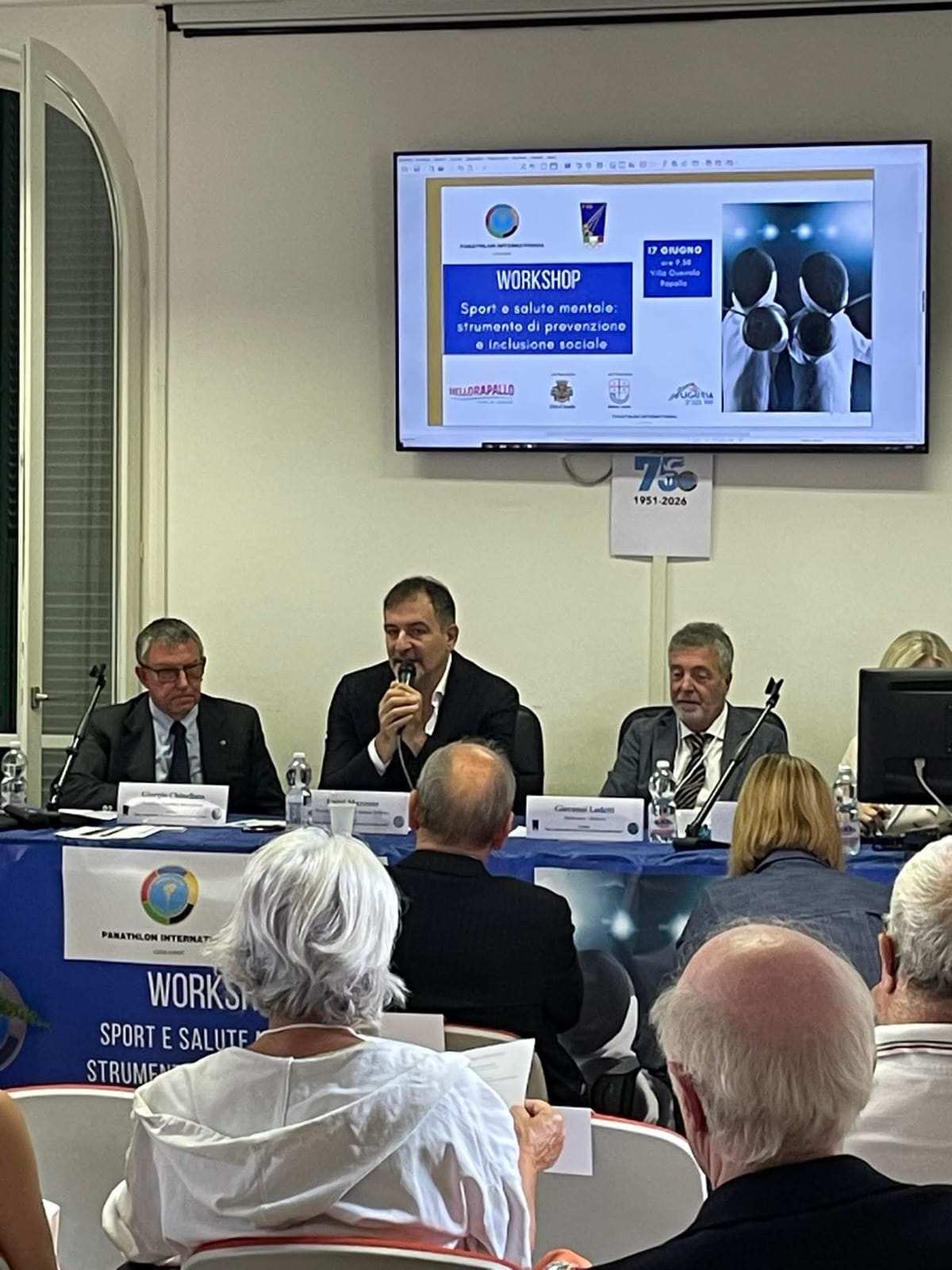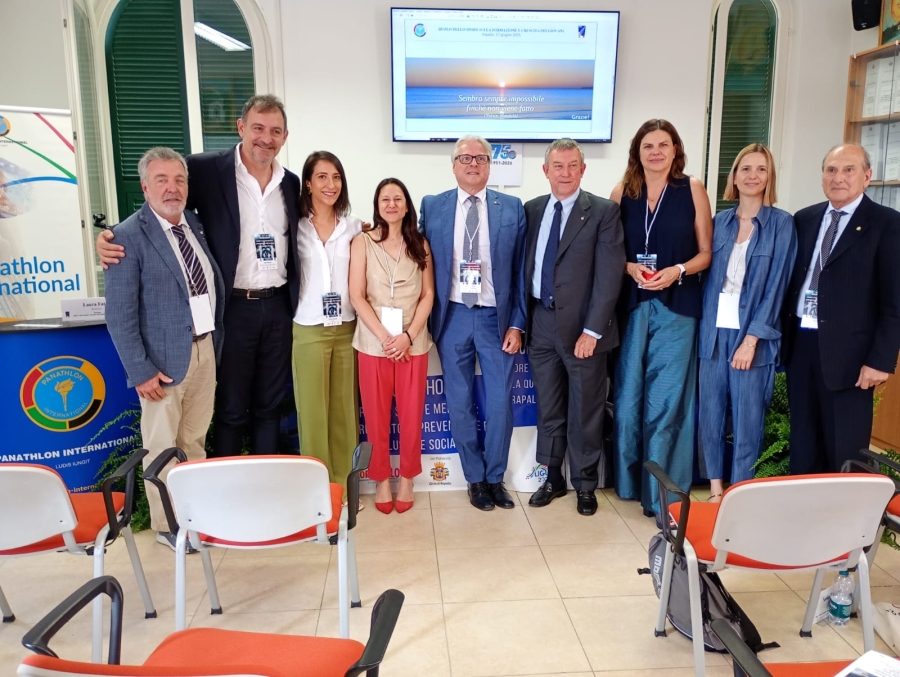
RAPALLO, June 17 – The workshop "Sport and Mental Health: A Tool for Prevention and Social Inclusion" was held in Rapallo in the beautiful setting of Villa Queirolo, the headquarters of Panathlon International.
A valuable opportunity for discussion and in-depth exploration of a highly relevant topic, involving athletes, sports leaders, and the entire community.
The event was also attended by the Mayor of Rapallo, Elisabetta Ricci, along with numerous local authorities and institutional representatives, underscoring the significance of this event.
The discussions were moderated by Luigi Mazzone, President of the Italian Fencing Federation and Director of Child Neuropsychiatry at the University of Tor Vergata-Rome and Giovanni Lodetti. They shared experiences and reflections on the importance of sport as a tool for psychophysical well-being and social inclusion together with Giorgio Chinellato, President of Panathlon International,
The morning was intense and rich in thought-provoking content, thanks to the insightful presentations by: Annalisa Avancini, psychologist and psychotherapist; Chiara Carnovale, psychologist and head of the Autism Center at the Progetto Sud Community; Leno Chisci, expert in sports ethics and youth education, President of the “Development, Study, and Training Center” of Panathlon Area 6 Tuscany; Laura Fatta, psychologist and researcher at the National Institute of Health; Giovanni Lodetti, Chair of Social Well-Being through Physical Movement, University of Milan - Panathlete of Milan; Assia Riccioni, child neuropsychiatrist at the Policlinico Tor Vergata in Rome.
The positive impact of sport on mental health was analysed with a particular focus on fencing, recognized not only as a formative and educational discipline but also as therapeutic. The discussion also emphasized the role of sport as a tool for prevention and addressing mental health challenges, providing spaces for growth, relationships, and recovery, particularly for the most vulnerable populations.
At the conclusion of the event, a lively debate highlighted the relational difficulties between families and sports clubs, as well as the challenges related to managing new issues among young people.
The need to introduce good practices and adequately trained professionals capable of addressing new educational and social challenges was strongly emphasized. Sport – it was reiterated – is truly a form of medicine: an indispensable resource for the growth, well-being, and, in many cases, the salvation of children and young people.
With this initiative, Panathlon International and the Italian Fencing Federation reaffirmed their commitment to promoting the ethical, educational, and social value of sport, contributing to the dissemination of a culture of well-being based on inclusion, respect, and solidarity.