


Good Governance’ - “Development & Solidarity”- IV Webinair organised by the IOC for 2024

Last 11th December Panathlon International, the Secretary General Callo Simona together with Rossi Monica Administrative Secretary, participated in the fourth and last webinar organised by the IOC for 2024 dedicated to ‘Good Governance’. On this occasion the focus was ‘Development & Solidarity’.
In addition to the PI there were 40 other participants representing Sports Federations and Associations. The suggestion that arose after the meeting is to create a Good Governance programme for the coming four-year period 2025/2028.
Here are the main points discussed, which are also well specified in the IOC Code of Ethics:
Distribution of resources
Financial resources generated by sport must be reinvested in sport, with a focus on the development of sport and the direct or indirect support of athletes. Financial revenues must be allocated fairly and efficiently to ensure balanced and attractive competitions, must be dedicated to promoting fair, inclusive and diverse sport, with a focus on gender equality. Financial resources must be used through clear and transparent processes aligned with the development objectives of sport and the principle of solidarity must be a key element in their allocation.
To ensure responsible management of funds, specific mechanisms must be put in place to monitor and evaluate the use of resources by beneficiaries.
For all these reasons, the IOC will monitor the use of donated funds at 3 well-defined levels.
Environmental and Social Responsibility
All sports organisations will have to commit to minimising negative impacts and maximising positive ones by taking responsibility through the organisation of events, promoting gender equality, inclusion and diversity; respecting and promoting human rights; and pursuing environmental excellence.
Collaboration between Sports Organisations and Government Authorities
Sports organisations and government authorities must collaborate and coordinate their actions, respecting each other's jurisdictions and responsibilities, and avoiding undue interference. This collaboration must foster the development of sport at all levels; support and protect athletes, counteracting doping, all forms of manipulation, corruption in sport, as well as harassment, abuse and violence; use sport as a tool to protect young people from crime.
Sports development programmes must be designed to contribute to the Sustainable Development Goals (SDGs) and in particular promote the creation of partnerships between sports organisations, and work towards the expansion and maintenance of sports facilities in countries in need.
Autonomy of the Olympic Movement
During the meeting it was reiterated that all sports organisations must maintain their autonomy and political neutrality in operations and governance. It is essential to reject any form of political, religious or economic pressure that could hinder compliance with the Olympic Charter.
Finally, sports organisations should seek sources of funding that are compatible with the Fundamental Principles of Olympism, promoting diversification of revenues to ensure the sustainability and independence of their activities.
In short, ‘good governance’ is an opportunity to consolidate credibility. We all have a role to play towards our organisation and our members.
During the webinar, William Glenwright, Head of Global Development for the International Cricket Council, Julie Marks (Sustainability Working Group) and Saurav Ghosal (Co-Chair, Athletes' Commission) for the World Squash Federation spoke, bringing their experience in implementing Good Governance milestones.
The meeting ended with the promise of new webinars during 2025.
For more information, this is the link https://www.ipacs.sport/news/good-governance-webinars-conclude-successfully
(translated by Deepl)
Euro News 26 & 27 November 2024 - Brussels -“Beactive Awards”

On Tuesday 26 November, the gala evening of the ‘beactive awards’ took place in
the presence of Mrs Ahrenkilde Hansen,director General for Education, Youth, Sport and Culture European Commission and Mrs Floor Van Houdt , Head of EAC Unit Sport.
Paul Standaert, was present at the gala evening and the debriefing as representative of the International Board and President Chinellato.
Four awards were presented during the gala evening.
Prof Em Thierry Zintz, past member of Panathlon’ s scientific commission was member of the jury that granted an award to:
- Sport Union Austria, Education award
- Metropole de Lyon France, Workplace award
- Fundacj Rozwoju Sportu Poland, Across Generation award
- Allessio Bernabò Italy, Local Hero award
The evening was followed by a interesting keynote address by former Olympic Gold Fencing, Dr Diana Bianchedi, Chief Strategy Planning &Legacy Milano Cortina 2026.
As always, this event was a fine opportunity to connect with sport enthusiasts from EU countries.
The following morning was the debriefing of the 2024 European Week of Sport. This year was the participation record was again broken.
In 24 countries, 15 million persons have participated at one of the 50.000 Events.
Panathlon International is partner of EWOS since 2015. Since 2020 the PI clubs have accelerated their participation, and the Italian Panathlon Clubs are in the lead. More than 20 Italian clubs organized an event in participation of EWOS.
Paul Standaert is grateful to all the clubs and their presidents in joining this European initiative.
The workplan for 2024-2027 was presented with a focus on three domains:
-integrity and values in sport
-social economic and sustainable dimension of sport
-participation in sport and healthy enhancing physical activity
In 2025 EU will celebrate the 10th anniversary of this great initiative.
As this will be a special year for EWOS, Panathlon could develop an one common initiative that unites clubs all over Europe in EWOS 2025.
Italian tennis on top of the world can open a unique cycle in the history of Italian sport

by Alberto Bortolotti
Val Pusteria and Val Gardena incubators of the Sinner phenomenon. Those 2018 words to the Bolzano RAI: ‘I will be number 1’. He takes his teammates by the hand and leads them to the roof of the planet. Drop shot, a touch of poetry in Jannik's progress. The sense of team growing in females and males. The ‘overshadowed’ feat of the girls in the Billie Jean King Cup .
My personal excursus in Alto Adige, or South Tyrol as the locals perhaps still prefer, began in the 1960s with trips, together with my parents, to the Hippodrome of Maia, Merano where a grand prix was run - a gallop - which was also linked to a State Lottery: and my father Rino used to tell the story for the readers of Stadio. At the time, the Passer Promenade was teeming - it was September - with kiosks for traubenkur, or grape juice as a therapeutic remedy: the stuff of 19th-century courts, Merano was truly a timeless place. Later, when I started working too, at the end of the 1970s, the fashion broke out, pushed by the Tourist Promotion Companies, of inviting journalists on ‘educational tours’; the land on the border with Austria, a few decades after the irredentist bombs of Eva Klotz, had plenty of money to invest in tourism.
I remember the shouting of the Bruneck ice hockey ‘ultras’, ‘Fohr, fohr, Bruneck tor’, the discovery of knodl, kaminwurzen, kaiserschmarren and every other good thing, the old men from the villages who, in stunted Italian, urged their children to master it better, a blood bond ‘more with Bavaria than with Austrians’, a frequenter of the stube in Rasun told me, and even a few downhill runs from the lifts at Sesto in Pusteria.
Here, more or less in this Tyrol, the baby of the Sinner family was born. Who could have been No. 147 in the FISI giant slalom ranking (or a good C in mid-football, Ligabue model) and instead, fortunately, chooses to be No. 1 in the world tennis ranking (and the strongest tennis player in Italian history, already, at the age of 23). He exposes all this with great clarity to his colleague Daniele Magagnin, a journalist from Bolzano, after a (partial) failure (who beats him is such a Peter Heller, German, career high 273 in the world) in the Challenger of Santa Cristina in Val Gardena that would have brought him within the top 900 (!) rackets of the globe. It was 18 August 2018. ‘My dream is to become number 1 in the world and to win as many slams,’ he says with apparent self-assurance after saying that his role model is Andreas Seppi (South Tyrolean like him, Italian Daviscupman, number 18 in the ranking in 2013). Then he wins the ITF in Bergamo, publicly thanking the ball boys (he hasn't changed!).
There is also the problem of having appeared too ‘bold’, so much so that he confided to a friend ‘I am not a “braggart”, but simply a person who sets himself a goal’. And it is, I think, the absolute debut in the use of a term that is as much Bolognese as it is Romagnolo, before the tortellini of the mother of his former physiotherapist, the anzolese Jack Naldi (that broth, for so many reasons, is no longer tasted. And it is also sad, but right).
His calmness, his being a silent, thoughtful, affectionate, grateful ‘captain’ made him as great as the variety of strokes he now put together: late arrivals, a deadly drop-shot (what a beautiful English term in the face of the banal ‘short ball’) and a serve, if not of absolute level, at least remarkable. With the fusion of these talents, it was not impossible to predict the encore of the Davis success, nor even the regrowth of Matteo Berrettini, a doubles player of good calibre, better than Jannik (doubles is not the sum of two singles players, it is worth remembering), but above all the bearer of three points out of three matches: a re-boom also the result of the brotherly attention that Sinner dedicated to him. And patience if the fragile Musetti of the first day in Malaga was not able to redeem himself or the solidity of the Bolelli-Vavassori doubles was not allowed to show itself. The ‘manager’ Volandri did not - almost - miss a beat.
If possible, the girls did a much more titanic feat in the Billie Jean King Cup. There was no number 1, there was no precedent (ok, there was, but far in time and, Errani aside, with other protagonists), there were no ‘Sinner-like’ exploits in the circuit. And yet Bronzetti's promotion to number two of the Italian team, bypassing the more titled Cocciaretto, the great combativeness of Paolini, still number four in the world, the team sense of Sara Errani and the great calmness of the non-playing captain ‘Tax’ Garbin hit the mark. The only pity is that the big TV media did not believe it, but the girls, third in the world ranking, have made that upgrade, which is mainly the result of an untouchable group like cement.
The racket, in the world, speaks Italian. For the sporting world, this is an unspeakable satisfaction. The group sense of the men's and women's teams is superior to that of Cucelli/Del Bello 1 and 2 (immediate post-war period), Pietrangeli/Sirola/Tacchini/Gardini/Merlo (1960s), Panatta/Bertolucci/Barazzutti/Zugarelli (Chile ‘76) and Vinci/Errani/Pennetta/Schiavone (Fed Cup 2013). The new generations will have many faults but, being made up of more normal, less original, not at all crazy, perhaps over-formed people, they have less trouble getting behind the flag. I am optimistic.
Why? I want to tell you a secret: it is not over.
La jeunesse au pouvoir : l'arbitre français Letexier, âgé de 35 ans, remporte le prix Campanati

Le plus jeune arbitre de l'histoire de la finale du Championnat d'Europe de football : « La nomination et le prix sont une grande surprise.
Je suis inspiré par mon compatriote Vautrot ».
par Fabio Monti
Giulio Campanati, Milanais né en 1923, reste l'une des personnalités les plus importantes du monde de l'arbitrage, et pas seulement en Italie. Enregistré pour la première fois en 1940, siffleur international depuis 1957, il a dirigé 166 matches en Serie A de 1952 à 1966, date à laquelle il a décidé de mettre fin prématurément à sa carrière pour entamer une longue et prestigieuse carrière d'entraîneur. Membre de la commission des arbitres de la FIFA et de l'UEFA de 1968 à 1992, il a été désignateur de la Serie A de 1968 à 1972 et président de l'Association italienne des arbitres pendant 18 ans, de 1972 à 1990.
Cela ne l'a pas empêché de se faire un nom en tant qu'entrepreneur : son entreprise de mosaïque a permis de refaire le revêtement de la Galleria Vittorio Emanuele au cœur de Milan et la façade de la Rinascente sur la Piazza del Duomo.
Une figure aussi importante ne pouvait pas être oubliée et c'est pourquoi, trois ans après sa mort en 2011, le prix 'Giulio Campanati' est né, destiné au meilleur arbitre de la Coupe d'Europe ou de la Coupe du Monde, distingué pour la qualité de ses directions au cours de ces tournois. Le prix a donc été lancé en 2015 à l'occasion de la Coupe du monde au Brésil, par choix de l'association « Amici di Campanati » et de la section des arbitres de Milan, avec le soutien de la Fédération italienne de football et la direction de son fils Giorgio, et sous l'impulsion d'une autre figure fondamentale du monde de l'arbitrage, Cesare Gussoni.
Au tableau d'honneur figurent les noms de Nicola Rizzoli, choisi en 2014 après avoir arbitré la finale entre l'Allemagne et l'Argentine (qui s'est terminée en prolongation avec la victoire des Allemands 1-0) et en 2016 après l'excellent Championnat d'Europe, avec en point d'orgue la demi-finale France-Allemagne 2-0 ;l'Argentin Nestor Pitana, siffleur de la finale de Moscou entre la France et la Croatie (4-2) ; le Néerlandais Bjorn Kuipers, qui avait dirigé à Wembley le dernier acte de l'Euro 2020, Italie-Angleterre décidé aux tirs au but en faveur des Azzurri; et Daniele Orsato, tout juste rentré d'un grand tournoi au Qatar, qui s'est achevé par la demi-finale entre l'Argentine et la Croatie (3-0).
Dimanche 17 novembre, avant le début d'Italie-France (1-3), dernier match de la Ligue des Nations, au state de San Siro, le prix 2024 a été décerné au Français François Letexier, protagoniste d'un grand Championnat d'Europe en Allemagne, où il a dirigé Croatie-Albanie (2-2),Danemark-Serbie (0-0) et Espagne-Géorgie (4-1, huitièmes de finale), avant de surmonter la concurrence et d'être choisi par le désignateur de l'UEFA Roberto Rosetti pour diriger la finale de Berlin entre l'Espagne et l'Angleterre (2-1 le résultat final, 14 juillet).
La décision de l'UEFA et celle du jury du Prix Campanati, qui en est à sa sixième édition, ont un sens précis, puisque Letexier, Breton de Bédée, né le 23 avril 1989, également star des Jeux Olympiques de Paris, est devenu le plus jeune arbitre à diriger une finale de Championnat d'Europe. S'adresser aux jeunes pour un arbitrage de plus en plus en phase avec son temps et avec les nouvelles indications réglementaires, Var compris, car il est clair qu'on ne dirige plus seul, même si la décision finale revient toujours à l'arbitre sur le terrain : c'est l'indication fournie par la Fédération européenne de football.
Letexier est le deuxième arbitre français à diriger la finale du Championnat d'Europe, après Michel Vautrot, l'arbitre de Hollande-Union soviétique (2-0) le 25 juin 1988 à Munich.
Et ce n'est pas un hasard si ce passage de témoin a eu lieu, car, comme l'a expliqué Letexier lui-même, « Vautrot a toujours été une référence pour nous, et c'est précisément sa façon de diriger et de traiter les joueurs dont j'ai toujours essayé de m'inspirer ».
En présence du Président de la Fédération italienne de football, Gabriele Gravina, c'est Orsato lui-même qui a remis le prix à Letexier, qui n'a pas caché son émotion : « Je suis honoré de recevoir ce prix et je le suis pour trois raisons : parce que c'est le fruit de ce que j'ai fait au Championnat d'Europe, avec mon “équipe” ; pour l'importance du prix ; parce que dans le passé, ce prix a été remis à de grands arbitres. Lorsque j'ai appris l'existence de ce prix, j'ai été surpris, tout comme j'ai été surpris d'être nommé pour la finale de l'Euro 2024.
Et il explique sa relation avec Var : « Pour nous, c'est un outil très utile. D'une manière générale, il n'a pas changé notre façon d'arbitrer, car notre objectif a toujours été de donner le maximum en faisant le minimum d'erreurs. Mais en cas de mauvaise décision, cette décision restait et il m'arrivait de mal dormir en pensant à l'erreur que j'avais commise. Maintenant, tous les arbitres sur le terrain savent qu'il y a une bouée de sauvetage et c'est un grand soulagement. Il ne faut pas s'énerver si on est corrigé par Var, l'important c'est que le résultat final soit au-dessus des erreurs.
L'histoire de Letexier ne s'arrête pas là, en effet, et il n'est pas certain qu'il ne puisse pas être choisi une deuxième fois, à l'occasion de la Coupe du monde 2026.
Panathlon International-CSIT World Sports Games 2025 Award!

Also this year the joint venture with CSIT (International Workers' Sports Confederation) continues with the aim of encouraging, coordinating and promoting the development of the sporting ideal and its moral and cultural values in all Countries where CSIT is present by spreading the knowledge and the principles of our Movement. The Panathlon-CSIT Award gives all CSIT Member Unions a chance to nominate candidates, who have distinguished themselves in upholding the ethical and cultural values of sport.
By awarding this prize, the organizers wish to acknowledge, reward and celebrate those who have honoured and advocated such fundamental principles through their example and their actions. The nominations will be examined by the International Board of PI, which will choose who will receive this important award in 2025.
The previous awards were given to the Honorary President of CSIT, Prof. Kalevi Olin, and to Avi Sagi, both awarded during the past CSIT World Games closing ceremonies by PI past-President Pierre Zappelli.
The Panathlon International - CSIT World Sports Games 2025 Prize will be awarded at the World Sports Games 2025 in Loutraki, Greece.
42nd MILAN INTERNATIONAL FICTS FEST

The “SPORT MOVIES & TV 2024” represents the global culmination of film, television and sports culture.
This prestigious event, organised by the FICTS, saw the final of 20 Festivals (on 5 continents) of the International Circuit ‘World FICTS Challenge’, inspired by the powerful slogan ‘FICTS is Culture through Sport - Olympic Emotion’ and took place in Milan from 5 to 9 November (link: linktr.ee/fictsfederation).
The Festival was presented as part of the Milan Cortina 2026 Cultural Olympiad, a multidisciplinary, plural and widespread programme to promote Olympic and Paralympic values through culture, heritage and sport.
During the final day the President of Panathlon International Giorgio Chinellato intervened bringing the greetings of our Movement and underlining the strong collaboration that, for several years, has been born with FICTS and the projects carried out with our Foundation PI-D.Chiesa, with the primary objective to promote actions aimed at the development of ethics in sport.
A good day for sports culture.


Message from the International President at the end of the Paris 2024 Olympic and Paralympic Games

Dear Friends,
an emotional edition of the Paris Games ended a few days ago.
We know that, in various ways, there was an important and significant presence of Panathletes.
On behalf of the whole Panathletic family I want to extend my warmest congratulations to all athletes, technicians, managers and volunteers belonging to Panathlon Clubs, who have directly or indirectly participated in this edition of the Olympic and Paralympic Games.
For the first time since the pandemic, the world of sport met again, bearing witness to its resilience as well as its ability to break down social barriers.
We are proud that our Panathletes were also able to live this experience, sharing our values in the world's greatest sporting event, which, even with its contradictions and difficulties, has always been the scene of the highest sporting gestures that make us experience great emotions.
I wish you all the best in your activities, always following our motto: the path of sport that unites us!
I hope to meet you at the upcoming Winter Games in Milan-Cortina.
Congratulations and ad Maiora!

WORLD FAIR PLAY DAY

The celebration of the World Fair Play Day and the 2nd Award Ceremony ‘Fair Play for Peace’ of the EFPM took place at the Gothic Hall of the City Hall of Brussels.
Present at the celebration were the President of the International Fair Play Committee, Yeno Kamuti, the Past President of Panathlon International Pierre Zappelli and the President of Panathlon Club Wallonie-Bruxelles and the European Fair Play Movement, Philippe Housiaux.
The ceremony was marked by an exceptional moment.
Kelly T. Clements, UNHCR Deputy High Commissioner for Refugees was awarded the ‘Fair Play for Peace’ prize by the European Fair Play Movement in recognition of her work to highlight the impact of sport in spreading the positive values of peace and solidarity around the world. The Prize, awarded annually to an institution or association, highlights the positive impact of sport in spreading these essential values on a global scale.
This award underlines UNHCR's unwavering commitment to initiatives such as the ‘More than a game’ strategy, which promotes sport, not only as a form of entertainment, but as a powerful tool to promote peace, the inclusion of refugees in host communities and the creation of bonds of solidarity between people.
‘The office of the High Commissioner for Refugees should not exist if our world lived in harmony and peace,’ Philippe Housiaux stressed. ‘Unfortunately, 120 million forcibly displaced persons remind us daily how incapable our society is of finding acceptable human solutions. By awarding this prize, the European Fair Play Movement modestly recognises the immense hope represented by the work of the UNHCR: that of welcoming these forcibly displaced people to prepare for Peace’.


Panathlon International Club Buenos Aires - "El deporte contra el amaño de los partidos: cuando comenzar ...?" (Programa SAMF)
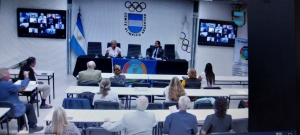
El 25 de marzo el Panathlon Club buenos Aires organizó una reunión presencial y virtual en el Salón Auditorio del Comité Olímpico Argentino para tratar el tema "El deporte contra el amaño de los partidos: cuando comenzar ...?" en el que se presentó las normas del Comité Olímpico Internacional en relación al tema y el programa SAMF. Se encontraron presentes autoridades del Comité Olímpico Argentino, su presidente Mario Moccia, la vicepresidente Alicia Massoni y el secretario general Víctor Sergio Groupierre, el presidente del Distrito Argentina del Panathlon International Jorge Minuto, presidentes de los clubes de Argentina, panathletas, profesores de educación física, alumnos universitarios, y panathletas de América a traves de zoom.
Se inició la reunión con la bienvenida del Presidente del Comité Olímpico Argentino, quién mencionó las tareas realizadas para despertar a la sociedad sobre este tema que preocupa a todos, luego la presidente del P.Club Buenos Aires Eva Szabo introdujo al orador Dr. Estanislao Osores Soler, abogado, consejero del Comité Olímpico Argentino quién explicó los problemas y manipulaciones que se ven en los deportes que interesan a multitudes y las medidas que aconsejadas por el COI.- Fabio Figueras desde el P.Club Lisboa explicó de que se trata el programa en el que están trabajando y de que forma tratan de lograr que los deportistas que recién se inicien estén al tanto de la problemática, mediante comics y presentaciones con el programa de SAMF. Finalizó la presentación la Secretaria General del P.I. Simona Callo, con información del programa SAMF y noticias del Panathlon Internacional.
La concurrencia pudo realizar preguntas a los oradores, finalizando la reunión con el agradecimiento a todos los participantes.

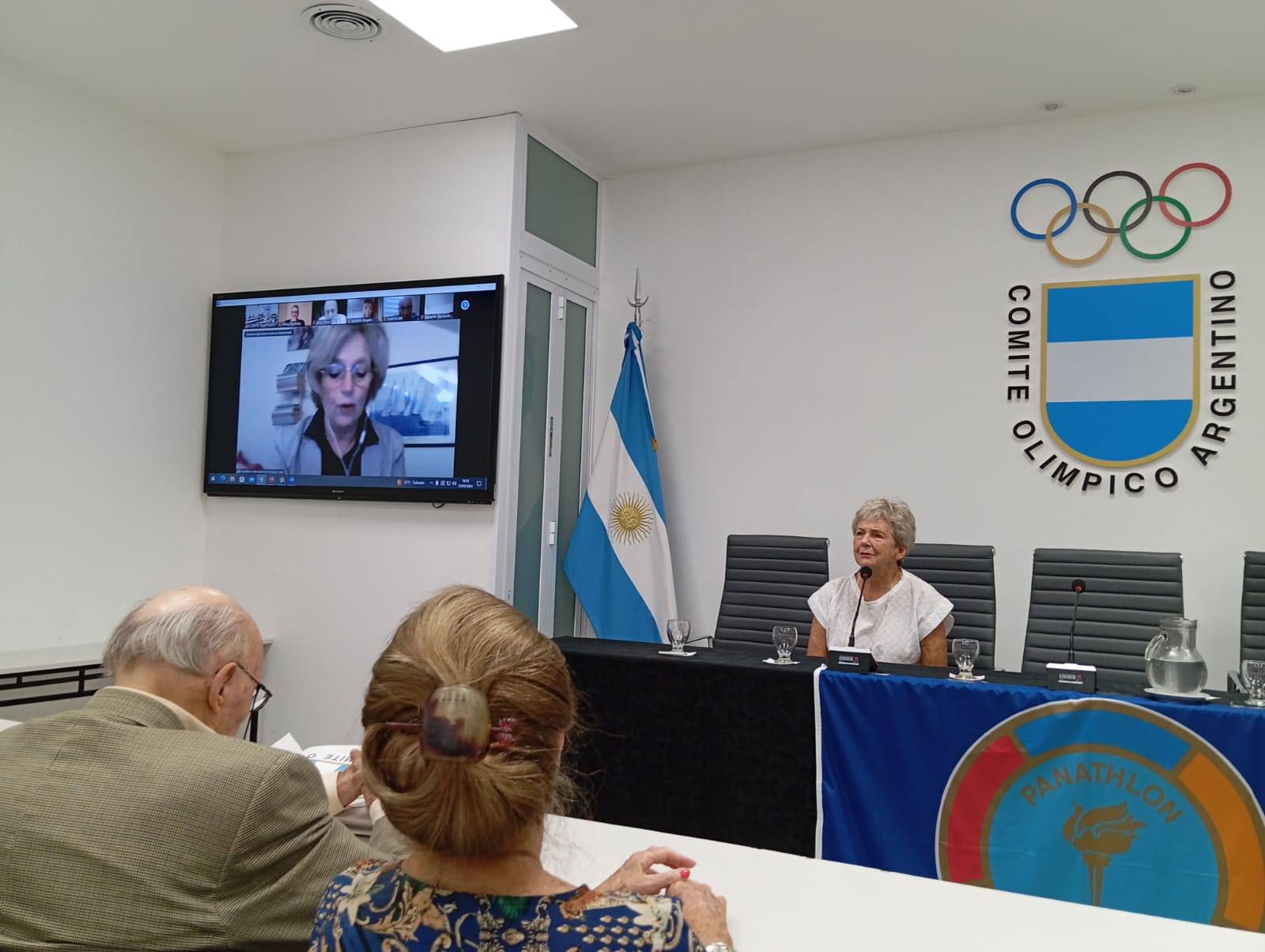
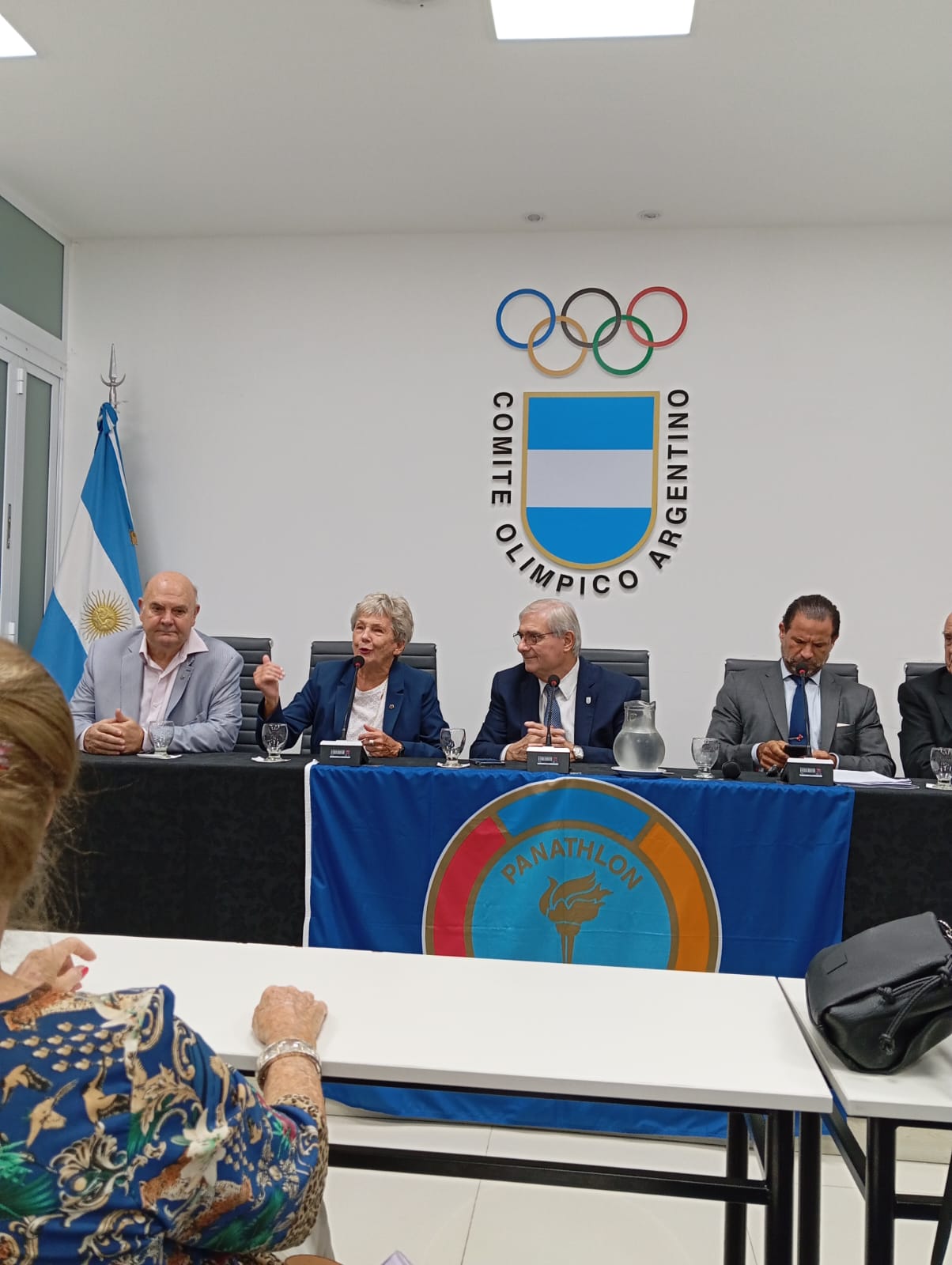
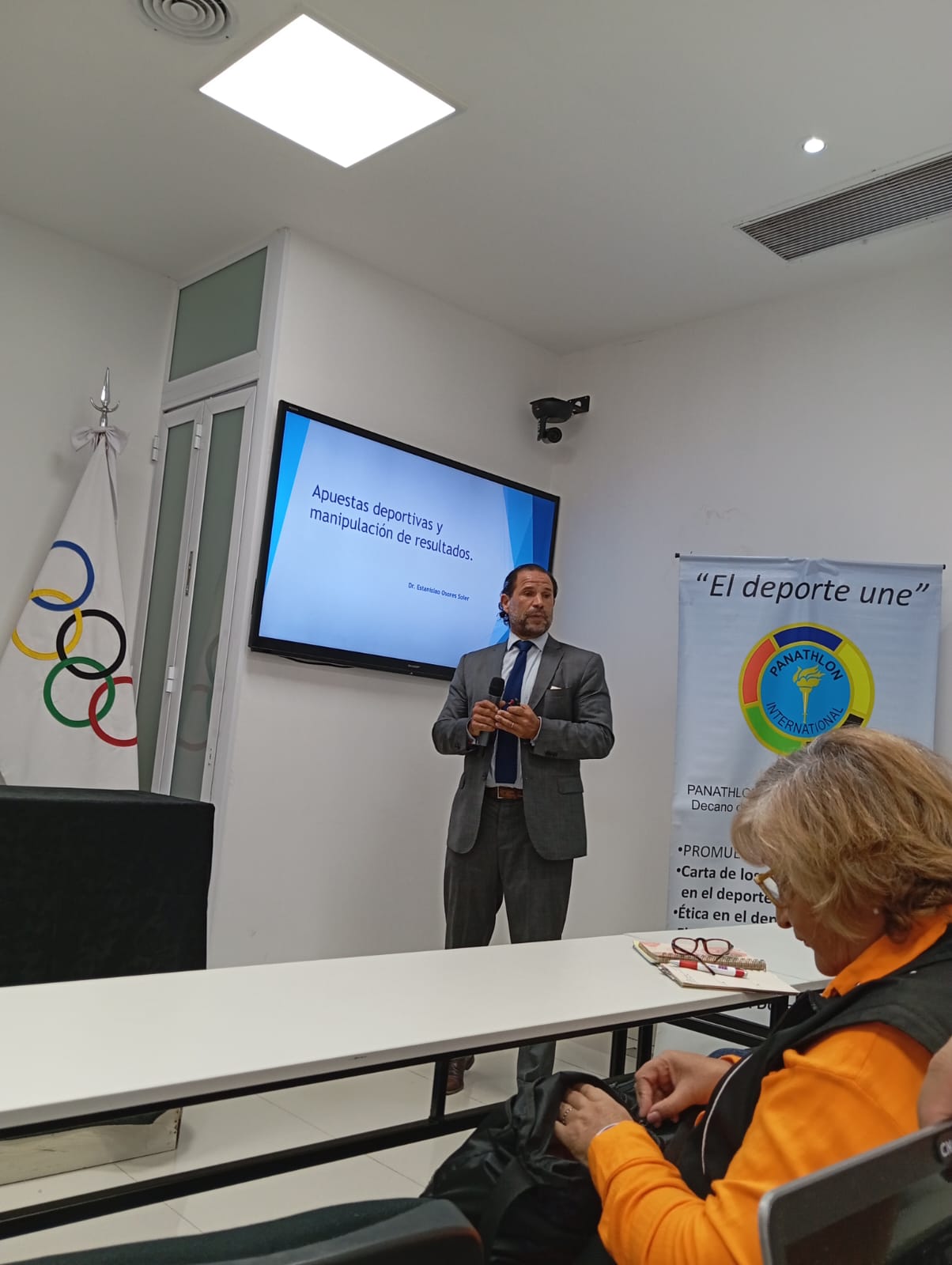
Photo Contest 2024 - 30 finalist photograph
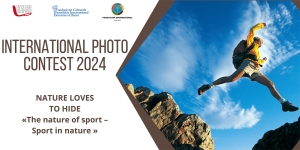
The PHOTO CONTEST 2024 - NATURE LOVES TO HIDE «The nature of sport – Sport in nature » is in its final stages. From the 148 competing photographs - coming from Europe, South America and Asia - the Panathlon jury selected the 30 finalists, who will be the subject of the exhibition which will be set up at the UNIMORE University of Reggio Emilia starting from 26 April. The prizes for the 3 photographs judged best by the Jury made up of members of the Palazzo Magnani Foundation, the Sports Foundation of the Municipality of Reggio Emilia and the Panathlon International – Domenico Chiesa Foundation will be awarded on 4 May during the awards ceremony of the OFF Circuit of PHOTOGRAFIA EUROPEA.
The organizers thank all the authors who participated and invite the Panathlon Clubs of the world to vote for the winning shot of the Panathlon Club Special Prize.
Link to view the 30 finalist photographs: photogallery